![Signals From [Space]](https://substackcdn.com/image/fetch/$s_!IXc-!,w_120,h_120,c_fill,f_webp,q_auto:good,fl_progressive:steep/https%3A%2F%2Fsubstack-post-media.s3.amazonaws.com%2Fpublic%2Fimages%2F9f7142a0-6602-495d-ab65-0e4c98cc67d4_450x450.png)
![Signals From [Space]](https://substackcdn.com/image/fetch/$s_!lBsj!,e_trim:10:white/e_trim:10:transparent/h_48,c_limit,f_auto,q_auto:good,fl_progressive:steep/https%3A%2F%2Fsubstack-post-media.s3.amazonaws.com%2Fpublic%2Fimages%2F0e0f61bc-e3f5-4f03-9c6e-5ca5da1fa095_1848x352.png)
A new era for pediatric kidney disease
Better science, new regulatory pathways, and smarter trial design are changing what’s possible for children with rare and genetic kidney disease

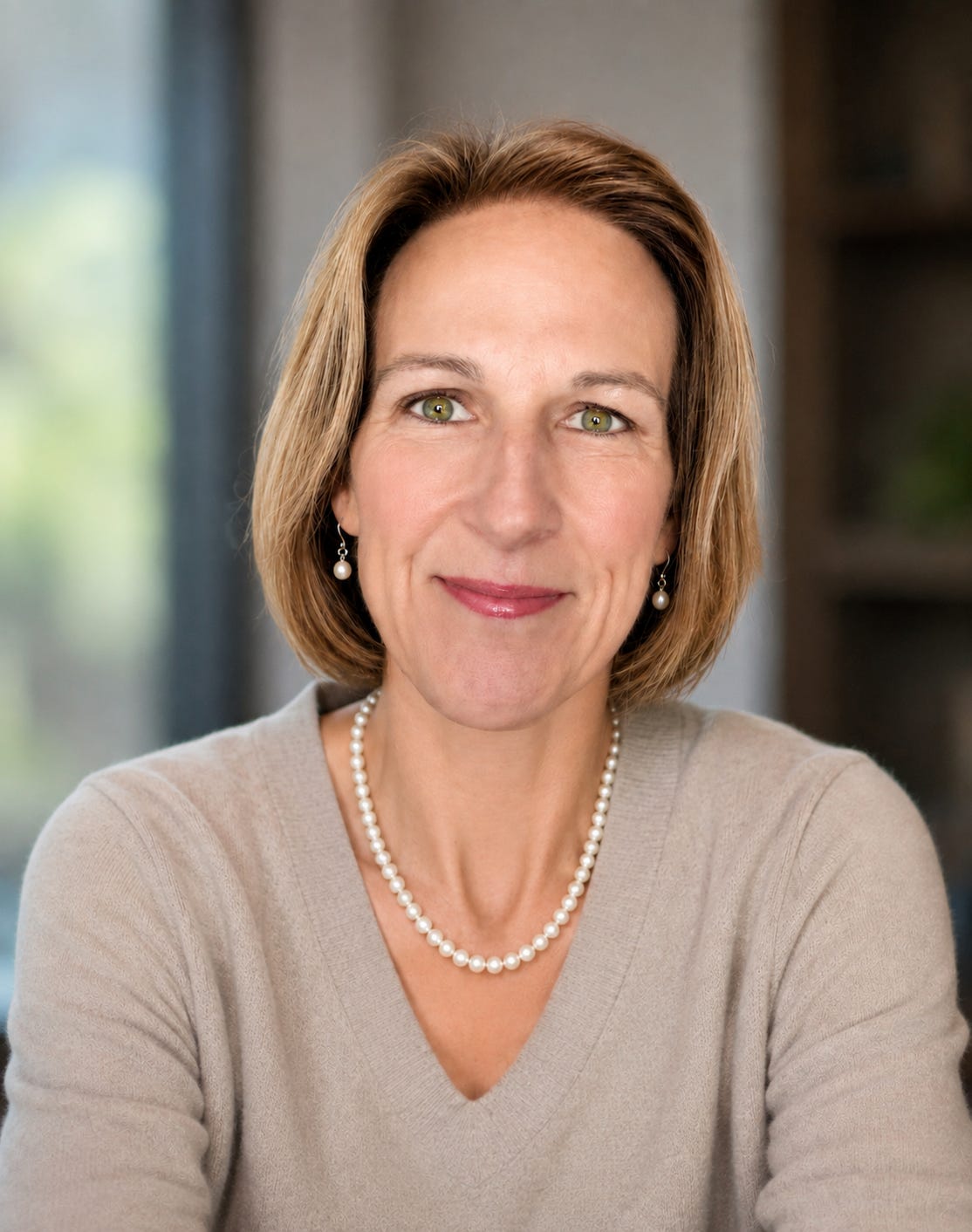
This Signals guest essay is part of our ongoing series highlighting voices across the kidney ecosystem and around the globe. Today’s essay is by Dr. Jennifer McKenzie, a pediatric nephrologist and expert in pediatric drug development, who co-designed and is leading the only global trial of an SGLT2i in children with broad CKD.
Medicine keeps two kinds of time. There’s the slow clock children’s therapies have long been made to wait on: sequential, adult-first timelines and deferred studies. And there’s the other kind: kairos, the decisive moment when conditions align and waiting stops making sense. For rare and genetic kidney disease, I think that moment is now.
Consider how far the science has moved. We’ve shifted from phenotype-first to genotype-first thinking, and it’s changing everything downstream, from how early we diagnose a child to how we design the trial that might help them. Multi-omics has changed the questions we can even ask: why two patients with the same COL4A variant progress so differently, or how podocyte heterogeneity shapes FSGS in ways bulk tissue never revealed.12 And biomarkers are crossing a real threshold, moving from exploratory endpoints to decision tools for patient selection, risk stratification, and regulatory qualification.
The regulatory posture has changed alongside the science. Increasingly, regulators are encouraging pediatric and adult development to move in parallel rather than in sequence, and offering the pathways to make it feasible. That shift matters more than it might sound: studying biomarkers and endpoints in both populations is what lets us extrapolate responsibly, moving from adult proof-of-concept to meaningful access for children without starting from zero.
So if the biology is maturing and the regulatory door is opening, why do so many programs still stall?
Scientific progress has exposed the harder problems in rare kidney disease: access, development, and execution.
The first gap is access. Children still spend years in a diagnostic odyssey because genetic testing isn’t ordered, covered, or interpreted consistently outside specialized centers. Precision therapies wait on the other side of a diagnosis that never gets made. Closing that gap is a care-delivery problem as much as a scientific one: embedded genetic counseling, real referral pathways, and treating clinical trials as earlier-line care options rather than last resorts.
The second gap is trial design. In a population small enough that every design choice matters, you cannot borrow a common-disease playbook. Success means more than bending an eGFR curve, especially in children, where eGFR can be a lagging indicator and early intervention matters most. The goal is to preserve function early enough that a child with CAKUT, Alport, or FSGS has a real shot at adulthood without dialysis. That’s why the surrogate-endpoint work happening right now is so consequential. Proteinuria is supporting accelerated approvals in IgA nephropathy, while PARASOL is strengthening the case in FSGS, ASSENT is building the global dataset for Alport, and TRACK is doing endpoint-enabling work in CAKUT.
This is the shift I care most about. The real innovation is designing the entire development program around the reality that the population is small: the strategy, regulatory path, endpoints, evidence, and trial itself. When my team designed EMPA-KIDNEY Kids, rebuilding the endpoint made a global pediatric CKD trial feasible.3 A mechanism-of-action readout could carry the efficacy question, with eGFR slope and proteinuria providing corroboration. Same patients, a more answerable question, and roughly two years off the timeline.
But even the best-designed study is only as good as the people who run it. Rare pediatric kidney trials succeed or fail at the site level, with the principal investigators, coordinators, and clinic teams who decide whether a family ever hears that a trial exists. A strong protocol only goes so far. Mobilizing a clinical community requires trust, understanding, and belief that the science is worth their patients’ time. Building that belief takes a bridge between two groups that too rarely connect: pediatric nephrologists in clinical practice, who know the patients and carry the sites, and pediatric nephrologists with drug development experience, who know what it takes to get a therapy across the line. I’ve spent years working at exactly that intersection, educating and energizing investigators, partnering with expert colleagues, and helping teams see how trials can give their patients earlier options. It takes relationships, patience, and a great deal of optimism to bring a community along.
I most want to help build that network: practicing PIs, sites, and coordinators connected with people who understand development and trial execution. When the clinical community and the development community move together, we can shepherd the strongest studies and most promising therapies through trials far more effectively, and the children we’re doing all of this for finally see the payoff.
And the circle has to be wider still. Patients and families should be strategic partners in this work, helping shape the questions, endpoints, and priorities from the beginning. One of the places cross-sector collaboration most often breaks down is data sharing. That’s exactly why pre-competitive consortia and shared infrastructure matter so much. With such a small population, we must maximize our learnings from each trial to make the subsequent trials better.
One caution as the field accelerates. We’ve gone from a therapeutic desert to a period of real opportunity. I worry the pendulum can swing too far toward speed over quality, and that in moving fast, we skip the foundational work of asking the right questions and building genuine trust with the communities we’re trying to serve.
Making the most of this moment will require scientific precision, multi-stakeholder collaboration, pragmatic execution, and a willingness to do the unglamorous work well.
We have a real opportunity to change what childhood with rare kidney disease looks like, and I do not intend to watch it from the sidelines. I want to be a partner in moving this space forward: with the clinicians who carry the patients, the developers with therapies for indications occurring in children & young adults, the regulators opening new pathways, and the families waiting with hope. If that’s the work you care about too, let’s talk.
###
If this is a space you’re working in, let us know what you’re seeing. Leave a comment below, or connect with Jen and others directly in the Signals Member Network.
Kuo DS, Labelle-Dumais C, Gould DB. COL4A1 and COL4A2 mutations and disease: insights into pathogenic mechanisms and potential therapeutic targets. Hum Mol Genet. 2012 Oct 15;21(R1):R97-110. doi: 10.1093/hmg/dds346. Epub 2012 Aug 21. PMID: 22914737; PMCID: PMC3459649.
Tao J, Polumbo C, Reidy K, Sweetwyne M, Susztak K. A multicolor podocyte reporter highlights heterogeneous podocyte changes in focal segmental glomerulosclerosis. Kidney Int. 2014 Apr;85(4):972-80. doi: 10.1038/ki.2013.463. Epub 2013 Nov 27. PMID: 24284512; PMCID: PMC3987991.
 | A guest post by
|
Jennifer - Right on target. From all of us that have raised or are raising, children with rare genetic kidney diseases, thank you for sharing your valuable lens on the entire process. We've experienced it all: from long diagnostic journeys to watching our kids suffer and have their lives forever changed through ESKD, dialysis and transplant. We appreciate you pointing out that patient organizations are at-the-ready to support drug development through collecting human data, guiding clinical trial protocols through real-world insights, and leading surrogate endpoint work with regulators, researchers, and clinicians. Trial design is critical, as is integration of genetic test results as part of inclusion and exclusion criteria so that we understand exactly who is being studied and responding/not responding to exploratory therapies.