![Signals From [Space]](https://substackcdn.com/image/fetch/$s_!IXc-!,w_120,h_120,c_fill,f_webp,q_auto:good,fl_progressive:steep/https%3A%2F%2Fsubstack-post-media.s3.amazonaws.com%2Fpublic%2Fimages%2F9f7142a0-6602-495d-ab65-0e4c98cc67d4_450x450.png)
![Signals From [Space]](https://substackcdn.com/image/fetch/$s_!lBsj!,e_trim:10:white/e_trim:10:transparent/h_48,c_limit,f_auto,q_auto:good,fl_progressive:steep/https%3A%2F%2Fsubstack-post-media.s3.amazonaws.com%2Fpublic%2Fimages%2F0e0f61bc-e3f5-4f03-9c6e-5ca5da1fa095_1848x352.png)
Rare & Genetic Kidney Disease Drug Pipeline Tracker
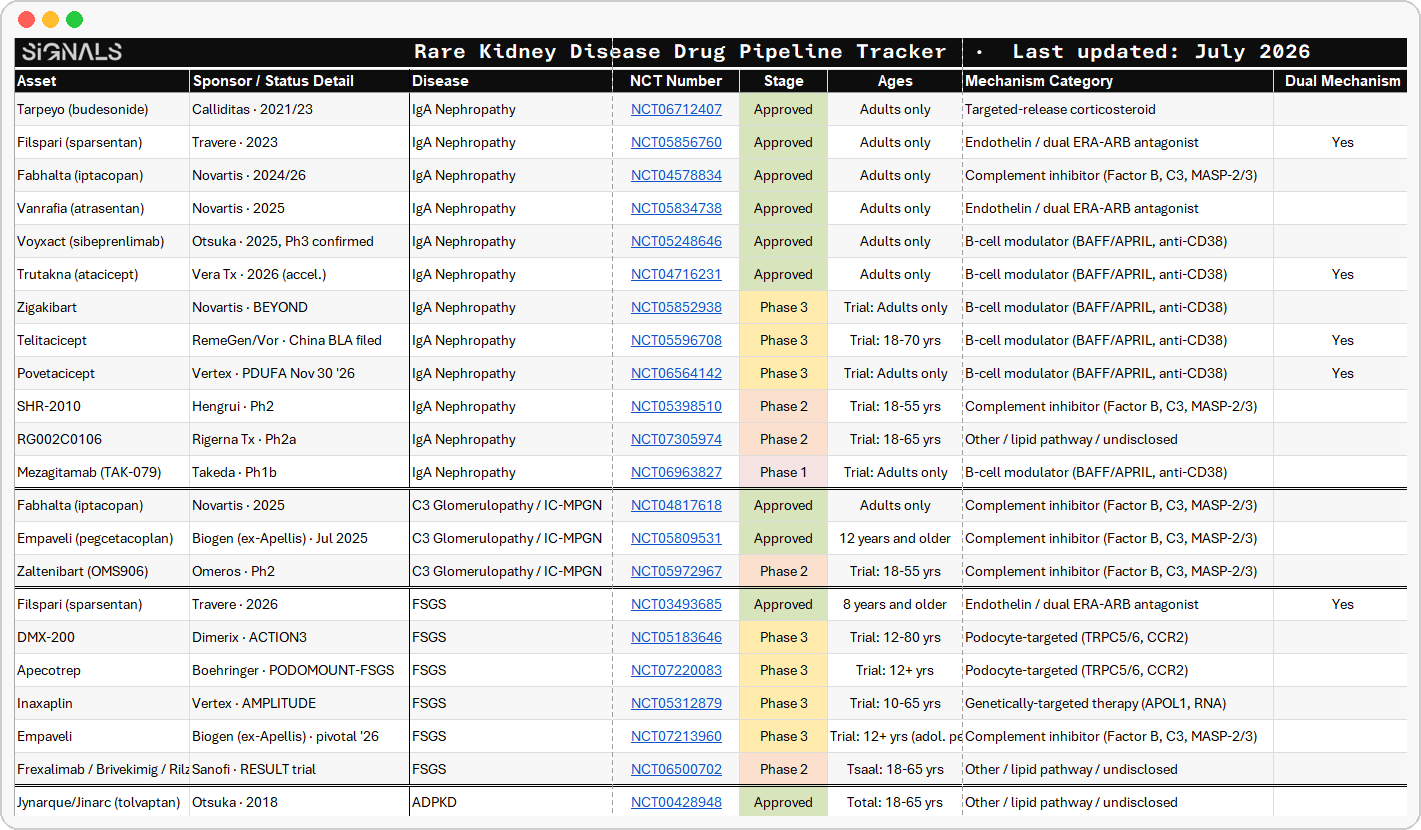
8 kidney diseases, 43 tracked programs, 9 approved therapies since 2021; mapped by stage, sponsor, and mechanism.

Nephrology has long relied on a handful of broadly acting therapies for chronic kidney disease. But there are more than 150 distinct rare and genetic kidney diseases, most with few or no dedicated treatments of their own, until now. We’re starting with the eight that have seen the most clinical movement; several are getting their first-ever approved therapies, reshaping what’s possible for patients and their care teams. We wanted to build an easy-to-read resource for our readers to track it all in one place.
This is a working document, and we need your help to get it right. If something’s off, out of date, or missing, tell us in the comments. Subscribe to get our updates, and become a member to download the full dataset and meet other kidney leaders shaping what comes next.
Pipeline Directory
Visual: Tracker At a Glance

IgA Nephropathy (IgAN)
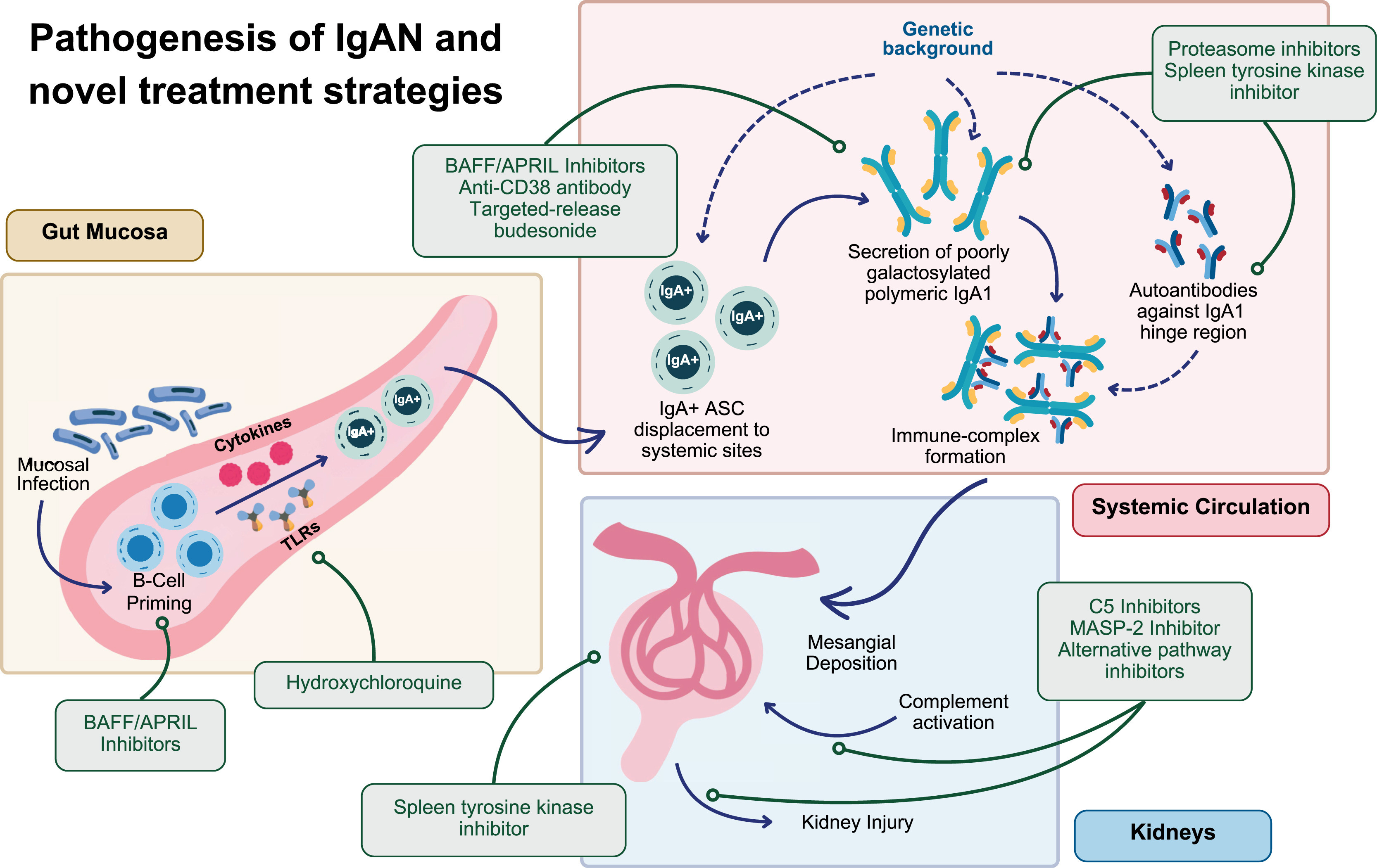
IgA nephropathy is the most common primary glomerular disease worldwide, affecting an estimated 160,000 people in the US. Five years ago it had no approved therapies; today it has six. The entries below track what's in trials or approved today, organized by stage. For the disease biology behind these mechanism classes, including some approaches already tried and unsuccessful, see the figure at the end of this section.
Approved
Tarpeyo (budesonide)
Sponsor: Calliditas Therapeutics
Mechanism: Targeted-release corticosteroid
Timeline: Accelerated approval in 2021; full approval in 2023
Notes: First approved therapy for IgAN; targeted-release formulation limits systemic steroid exposure.
Filspari (sparsentan)
Sponsor: Travere Therapeutics
Mechanism: Dual endothelin (ETA) and angiotensin II (AT1) receptor antagonist; one molecule, two targets
Timeline: Accelerated approval in 2023; full approval in 2024
Notes: Also approved in FSGS (2026).
Fabhalta (iptacopan)
Sponsor: Novartis
Mechanism: Oral Factor B inhibitor (alternative complement pathway)
Timeline: Accelerated approval Aug 2024; full approval July 2026
Notes: APPLAUSE-IgAN: showed a 48% slower eGFR decline vs. placebo over two years, the first complement inhibitor to confirm kidney-function preservation in IgAN rather than just proteinuria reduction. Also approved in C3 glomerulopathy (2025).
Vanrafia (atrasentan)
Sponsor: Novartis
Mechanism: Selective endothelin A receptor antagonist
Timeline: Accelerated approval in 2025
Study: ALIGN
Voyxact (sibeprenlimab)
Sponsor: Otsuka
Mechanism: Anti-APRIL monoclonal antibody
Timeline: Accelerated approval in 2025
Notes: Phase 3 VISIONARY two-year results (Jul 2026): statistically significant eGFR stabilization and improvement, confirmatory data already in hand.
Trutakna (atacicept)
Sponsor: Vera Therapeutics
Mechanism: Dual BAFF/APRIL binder
Timeline: Accelerated approval Jul 2026
Notes: ORIGIN 3 interim: 42% proteinuria reduction vs. placebo at 36 weeks; confirmatory eGFR data expected Q3 2026 (NCT04716231)
Phase 3
Zigakibart
Sponsor: Novartis
Mechanism: Anti-APRIL monoclonal antibody
Trial: BEYOND (NCT05852938)
Telitacicept
Sponsor: RemeGen / Vor Biopharma
Mechanism: Dual BAFF/APRIL (TACI-Fc fusion protein)
Status: Approved in China (NMPA, Jun 2026); not yet filed in the US (NCT05799287)
Povetacicept
Sponsor: Vertex Pharmaceuticals
Mechanism: Dual BAFF/APRIL (TACI-Fc fusion protein)
Status: PDUFA Nov 30, 2026 (NCT06564142)
Phase 2
SHR-2010
Sponsor: Hengrui
Mechanism: MASP-2 inhibitor (lectin complement pathway)
Study: NCT05398510
RG002C0106
Sponsor: Rigerna Therapeutics
Mechanism: Undisclosed
Study: NCT07305974
Phase 1
Mezagitamab (TAK-079)
Sponsor: Takeda
Mechanism: Anti-CD38 (plasma cell depletion)
Study: NCT06963827
C3 Glomerulopathy / IC-MPGN
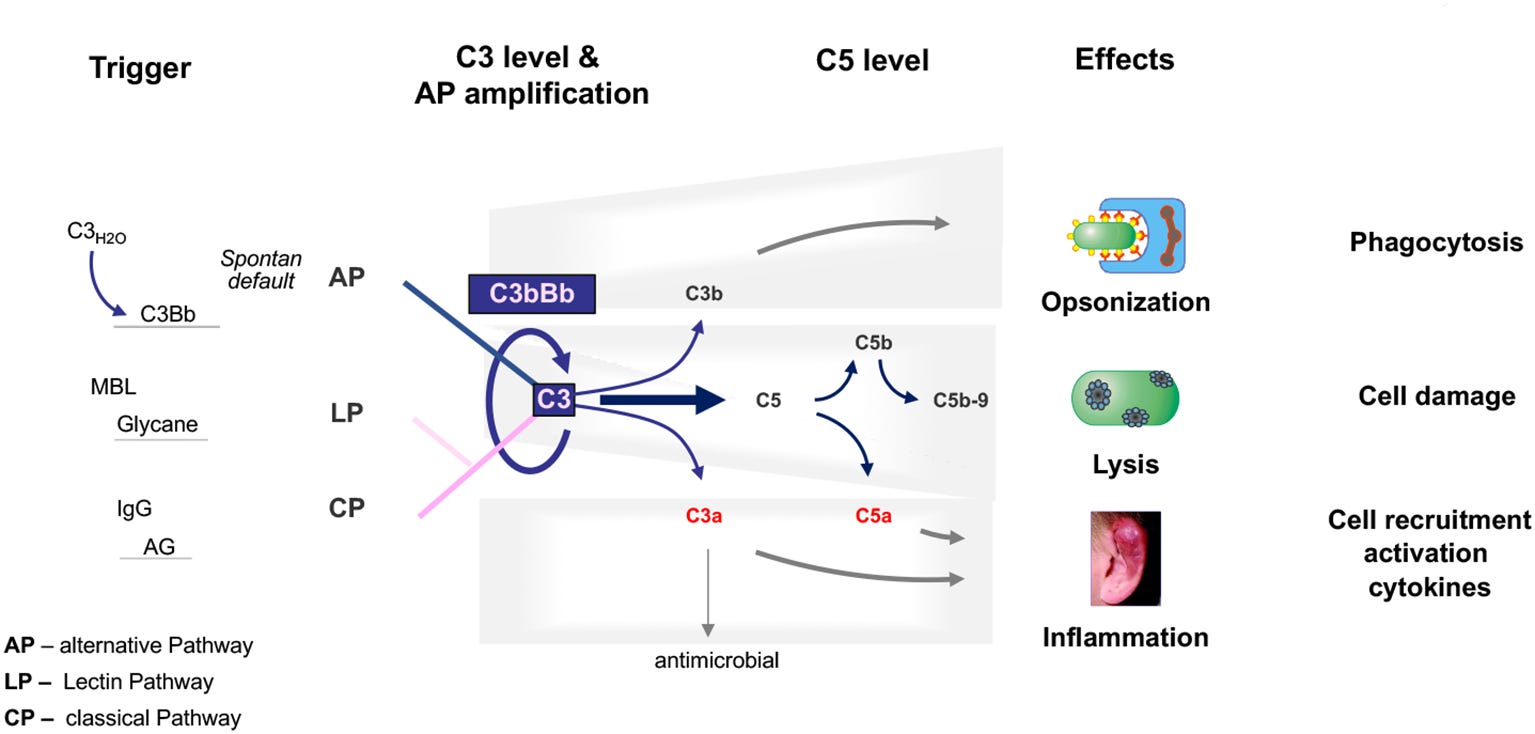
C3G and primary IC-MPGN are ultra-rare kidney diseases, affecting an estimated 5,000 people in the US. Both now have an approved complement inhibitor, a remarkably mature standard of care for a disease this rare. The pipeline behind them is thin, the frontier here has largely moved to real-world use. The figure below shows where in the complement cascade these therapies intervene.
Approved
Fabhalta (iptacopan)
Sponsor: Novartis
Mechanism: Oral Factor B inhibitor (alternative complement pathway)
Timeline: Approved in 2025
Notes: Also approved in IgA nephropathy (July 2026). (NCT04817618)
Empaveli (pegcetacoplan)
Sponsor: Biogen (via its 2026 acquisition of Apellis), partnered ex-US with Sobi
Mechanism: C3 inhibitor
Timeline: Approved July 2025
Notes: Phase 3 VALIANT study showed a 68% reduction in proteinuria versus placebo, alongside stabilization of kidney function and substantial clearance of C3 deposits on biopsy. Also advancing into a pivotal FSGS trial. (NCT05809531)
Phase 2
Zaltenibart (OMS906)
Sponsor: Omeros
Mechanism: MASP-3 inhibitor (alternative complement pathway) (NCT05972967)
Notes: Distinct from Omeros’s earlier MASP-2 asset narsoplimab, which did not advance in this indication.
FSGS
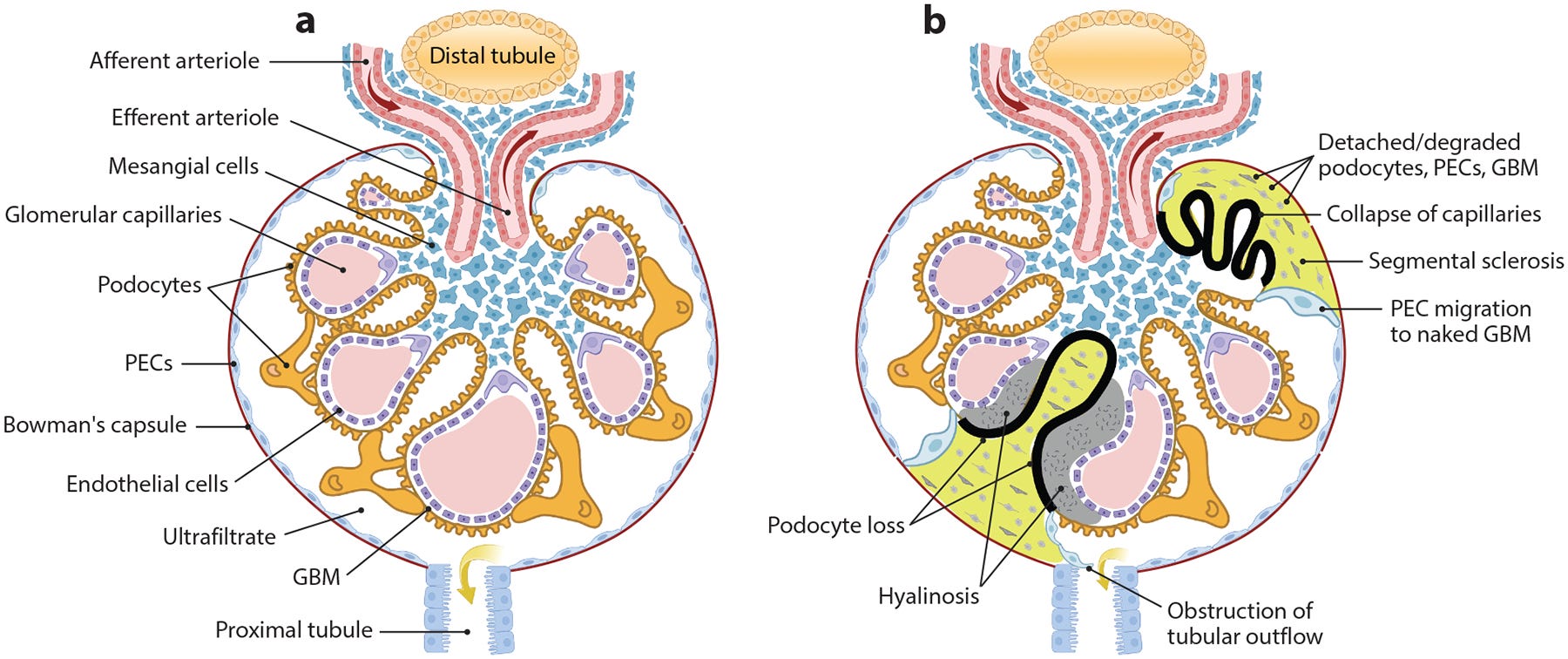
Focal segmental glomerulosclerosis (FSGS) is a progressive glomerular disease characterized by podocyte injury, proteinuria, and risk of kidney failure. Until recently, no medicines had been approved by the FDA or European Medicines Agency, with management focused on supportive care and proteinuria reduction. Filspari changed that in April 2026. Behind it sits a genuinely varied pipeline, more mechanistic diversity than any other disease in this tracker at a comparable stage. The images below show how FSGS changes the structure of the glomerulus.
Approved
Filspari (sparsentan)
Sponsor: Travere Therapeutics
Mechanism: Dual endothelin (ETA) and angiotensin II (AT1) receptor antagonist, one molecule with two targets
Timeline: Approved April 2026
Notes: First approved in IgA nephropathy (2023). (NCT03493685)
Phase 3
DMX-200
Sponsor: Dimerix
Mechanism: CCR2 antagonist
Trial: ACTION3 (NCT05183646)
Apecotrep
Sponsor: Boehringer Ingelheim
Mechanism: Oral TRPC6 inhibitor (podocyte-targeted)
Trial: PODOMOUNT-FSGS
Notes: Also in Phase 2 for Alport syndrome via the same company’s basket trial, PODOMOUNT-Basket. (NCT07220083)
Inaxaplin
Sponsor: Vertex Pharmaceuticals
Mechanism: APOL1-targeted small molecule
Trial: AMPLITUDE
Notes: The original proof-of-concept data for this drug was generated in APOL1-mediated FSGS specifically, before Vertex broadened its framing to APOL1-mediated kidney disease (AMKD) as a category. Also tracked under AMKD below with a second, earlier-stage trial (AMPLIFIED) for patients who don’t qualify for this pivotal study. (NCT05312879)
Empaveli (pegcetacoplan)
Sponsor: Biogen (via its 2026 acquisition of Apellis)
Mechanism: C3 inhibitor
Notes: Approved in C3 glomerulopathy since 2025. Apellis's January 2026 earnings release confirmed pivotal FSGS trial initiation, describing FSGS as a disease with "significant complement pathway involvement and high unmet need." The same release noted a parallel pivotal trial in delayed graft function (DGF), a related post-transplant complication, reflecting a broader push to extend complement inhibition across kidney diseases. (NCT07213960)
Phase 2
Frexalimab / Brivekimig / Rilzabrutinib
Sponsor: Sanofi
Trial: RESULT, a basket trial testing all three candidates, each with a distinct immune-modulating mechanism, in FSGS and minimal change disease. (NCT06500702)
ADPKD
Autosomal dominant polycystic kidney disease (ADPKD) is the most common form of PKD and the most common inherited kidney disorder, affecting an estimated 1 in every 400 to 1,000 people. It's caused by a mutation in the PKD1 or PKD2 gene, and typically presents between ages 30 and 50. ADPKD has had an approved therapy since 2018; the two programs now in trials aim to intervene closer to the disease's genetic cause rather than manage symptoms downstream.
Approved
Jynarque/Jinarc (tolvaptan)
Sponsor: Otsuka
Mechanism: Vasopressin V2 receptor antagonist
Timeline: Approved in 2018
Notes: Approved in 2018 based on TEMPO 3:4 and REPRISE, showing slower kidney volume growth and eGFR decline versus placebo. Still the only approved ADPKD therapy today. Carries a boxed warning for risk of serious liver injury, requiring monitoring. (NCT00428948, NCT02160145)
Phase 3
Farabursen
Sponsor: Novartis, acquired via its 2025 purchase of Regulus Therapeutics for up to $1.7 billion
Mechanism: Anti-miR-17 oligonucleotide
Notes: Phase 1b data showed complete cessation of kidney volume growth. Now in a single pivotal Phase 3 trial. (NCT05429073)
Phase 2
VX-407
Sponsor: Vertex Pharmaceuticals
Mechanism: PC1 (polycystin-1) corrector
Trial: AGLOW
Notes: Tries to correct the underlying protein defect directly, rather than managing downstream cyst growth. (NCT07161037)
ANCA-Associated Vasculitis (AAV)
AAV already has an approved complement inhibitor, avacopan, cleared in 2021, though the FDA proposed withdrawing that approval in April 2026 over a serious liver injury signal; the drug remains on the market. Two early-stage programs are testing different approaches behind it: one targeting complement further upstream, the other targeting B cells directly.
Approved
Tavneos (avacopan)
Sponsor: Amgen, via its 2022 acquisition of ChemoCentryx
Mechanism: C5a receptor antagonist (complement pathway)
Timeline: Approved in 2021
Age: Adults only; a pediatric Phase 3 trial (ages 6–17) is ongoing, estimated completion 2028
Notes: FDA proposed withdrawing Tavneos’s approval in April 2026, citing a serious liver injury signal and disputed elements of the original application. Amgen is contesting the decision; the drug remains on the market pending a ruling. (NCT02222155)
Phase 2
Povetacicept
Sponsor: Vertex Pharmaceuticals
Mechanism: Dual BAFF/APRIL (TACI-Fc fusion protein)
Trial: RUBY-3, Phase 1b/2a
Notes: The same molecule is in Phase 3 for IgA nephropathy and Phase 2b/3 for primary membranous nephropathy, three separate diseases in active trials simultaneously. (NCT06564142)
NM8074
Sponsor: NovelMed Therapeutics
Mechanism: Complement inhibitor
Notes: Phase 2, not yet recruiting. (NCT06226662)
APOL1-Mediated Kidney Disease (AMKD)
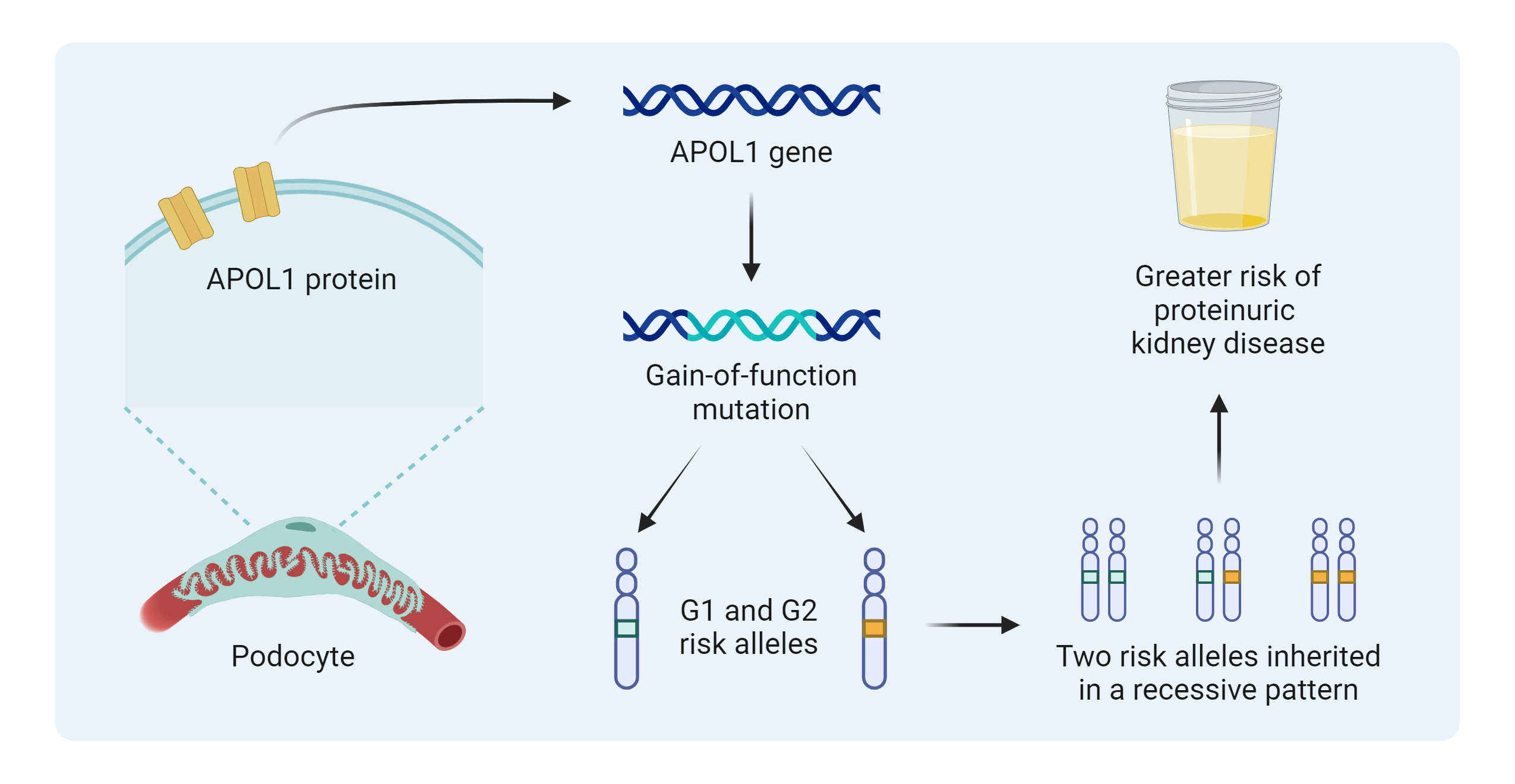
AMKD is a genetic risk category, not a single diagnosis: two copies of a high-risk APOL1 variant, most common in people of West African ancestry, raise the risk of kidney disease and can produce several different clinical pictures, including FSGS. Three companies are developing distinct approaches to blocking the APOL1 protein. The figure below shows how these risk variants are inherited.
Phase 3
Inaxaplin
Sponsor: Vertex Pharmaceuticals
Mechanism: APOL1-targeted small molecule
Trial: AMPLITUDE
Notes: Also tracked under FSGS above, where its original proof-of-concept data was generated. (NCT05312879)
Phase 2
AZD2373
Sponsor: AstraZeneca
Mechanism: APOL1 inhibitor
Study: APPRECIATE (NCT06824987)
MZE829
Sponsor: Maze Therapeutics
Mechanism: APOL1 inhibitor
Study: NCT06830629
Inaxaplin
Sponsor: Vertex Pharmaceuticals
Mechanism: APOL1-targeted small molecule
Study: AMPLIFIED, Phase 2b
Notes: Open-label study for patients with diabetes or other comorbidities who don’t qualify for the AMPLITUDE pivotal trial. Same drug, same target, different population. (NCT06794996)
Primary Membranous Nephropathy (pMN)
pMN has no approved therapy yet, but is closer than any other disease in this tracker without one: obinutuzumab's Phase 3 met its endpoint in February 2026 and is now under FDA Priority Review. Most of the programs behind it share a similar strategy, depleting or blocking the B cells that drive the disease.
Phase 3
Obinutuzumab
Sponsor: Genentech/Roche
Mechanism: Anti-CD20 monoclonal antibody (B-cell depletion)
Notes: Phase 3 MAJESTY trial met its primary endpoint in February 2026. Granted FDA Priority Review in mid-July 2026, with a PDUFA date of November 2026. (NCT04629248)
Felzartamab
Sponsor: Biogen
Mechanism: Anti-CD38 antibody (plasma cell depletion)
Trial: PROMINENT (NCT06962800)
Notes: The same drug is also in Phase 3 for kidney transplant rejection (TRANSCEND) and Phase 3 for IgA nephropathy (PREVAIL), three kidney indications in parallel development.
Povetacicept
Sponsor: Vertex Pharmaceuticals
Mechanism: Dual BAFF/APRIL (TACI-Fc fusion protein)
Trial: OLYMPUS, Phase 2b/3 (NCT07204275)
Notes: Also in Phase 3 for IgA nephropathy and Phase 2 for ANCA-associated vasculitis.
B007
Sponsor: Shanghai Jiaolian
Mechanism: Anti-CD20 monoclonal antibody (B-cell depletion)
Timeline: Phase 2/3, China (NCT06470191)
MIL62
Sponsor: Beijing Mabworks
Mechanism: Anti-CD20 monoclonal antibody (B-cell depletion)
Timeline: Phase 3, China (NCT05862233)
Phase 2
SHR-2173
Sponsor: Hengrui
Mechanism: Not yet disclosed
Timeline: Phase 2, China (NCT07354932)
Alport Syndrome
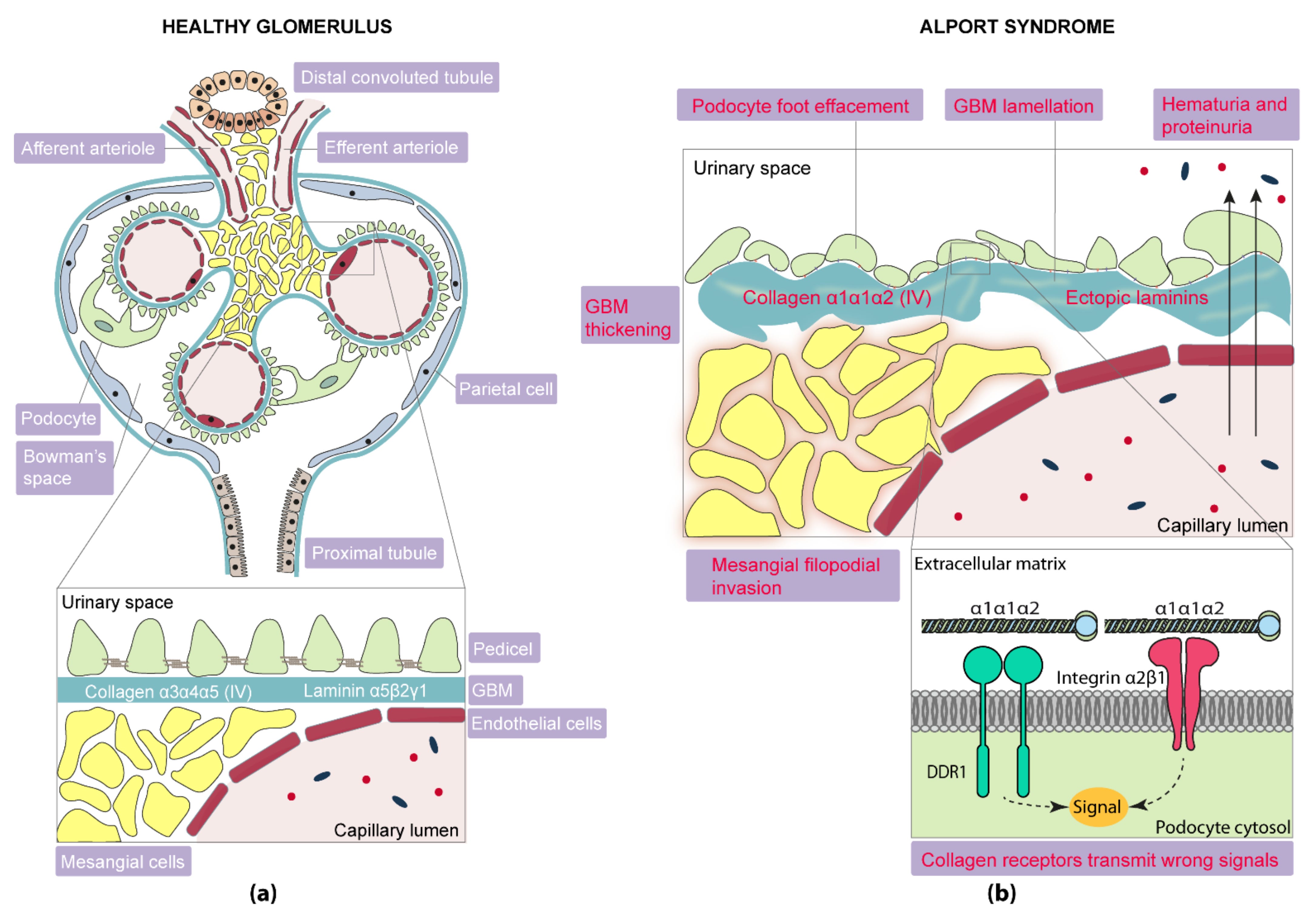
Alport syndrome is the only disease in this tracker with nothing beyond Phase 2, no approved therapy, and no active Phase 3 program today. That may not last: Vonafexor's January 2026 topline data reversed a historical eGFR decline in Alport patients, and Enyo Pharma has said it plans to move into Phase 3 in the second half of this year. The six programs below represent a fresh set of approaches to a disease that has seen real setbacks in the past.
Phase 2
Vonafexor
Sponsor: Enyo Pharma
Mechanism: FXR agonist
Trial: Alpestria-1, completed
Notes: Topline data reported a mean functional eGFR gain of +4.8 mL/min/1.73m² during treatment, reversing a historical decline of -6.4 mL/min/1.73m²/yr in the same patients, with 73% maintaining reduced albuminuria three months after stopping treatment. End-of-Phase 2 meetings planned for Q3 2026, with Phase 3 initiation targeted for the second half of the year. (NCT06425055)
Setanaxib
Sponsor: Calliditas Therapeutics
Mechanism: Dual NOX1/NOX4 inhibitor, one molecule blocking two related oxidase isoforms
Timeline: Phase 2a, completed June 2025 (NCT06274489)
Exaluren (ELX-02)
Sponsor: Eloxx Pharmaceuticals
Mechanism: Nonsense mutation readthrough therapy
Trial: EXACT, Phase 2b starting 2026 (NCT07523581)
Apecotrep
Sponsor: Boehringer Ingelheim
Mechanism: Oral TRPC6 inhibitor (podocyte-targeted)
Trial: PODOMOUNT-Basket (NCT07355296)
Notes: Also in Phase 3 for FSGS under the same company’s PODOMOUNT-FSGS trial.
R3R01
Sponsor: River3 Renal
Mechanism: ABCA1 stimulant (restores cholesterol efflux in podocytes)
Timeline: Phase 2, completed (NCT05267262)
BAY3401016
Sponsor: Bayer
Mechanism: Not yet disclosed
Timeline: Phase 2a (NCT07211685)
Closing
Thanks for reading Signals. This tracker only gets better with your help, so if something's off, out of date, or missing, please leave a comment below. This tracker continues to evolve with the field. Whether you're researching, running trials, or just trying to keep up with this space, we're glad you're here.
Get the dataset
This directory is always free to read. Signals members get access to the full dataset as it’s updated, high-resolution interactive PDF and Excel files, plus deeper analysis on the deals and data shaping kidney care, and a seat alongside 120+ kidney leaders across industry, academia, policy, regulatory, and advocacy.