![Signals From [Space]](https://substackcdn.com/image/fetch/$s_!IXc-!,w_120,h_120,c_fill,f_webp,q_auto:good,fl_progressive:steep/https%3A%2F%2Fsubstack-post-media.s3.amazonaws.com%2Fpublic%2Fimages%2F9f7142a0-6602-495d-ab65-0e4c98cc67d4_450x450.png)
![Signals From [Space]](https://substackcdn.com/image/fetch/$s_!lBsj!,e_trim:10:white/e_trim:10:transparent/h_48,c_limit,f_auto,q_auto:good,fl_progressive:steep/https%3A%2F%2Fsubstack-post-media.s3.amazonaws.com%2Fpublic%2Fimages%2F0e0f61bc-e3f5-4f03-9c6e-5ca5da1fa095_1848x352.png)
![Signals From [Space]](https://substackcdn.com/image/fetch/$s_!NnOt!,w_144,h_144,c_fill,f_auto,q_auto:good,fl_progressive:steep,g_auto/https%3A%2F%2Fsubstack-post-media.s3.amazonaws.com%2Fpublic%2Fimages%2F688fc47b-7202-4a2e-b4f4-fea2b047ab1b_1500x1500.png)

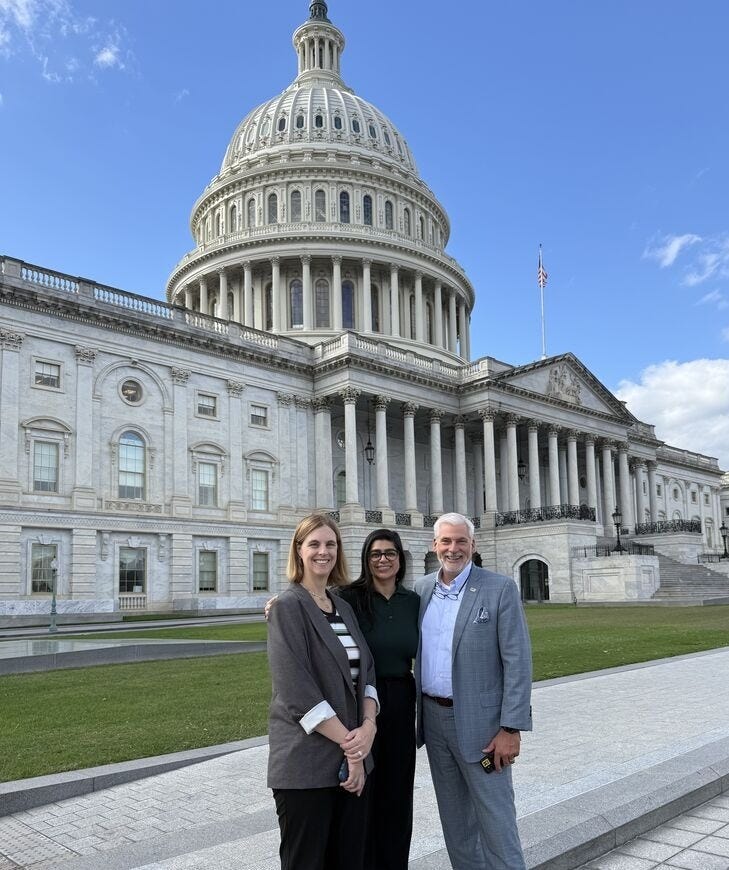
Ahead of the annual RPA meeting, I sat down with Kinjel Shastri, Romin Bonakdar, and Aman Deep, three recent fellows from the Renal Physicians Association’s (RPA) Leadership Development Program. All three are early in their careers in private practice. Different geographies and group sizes, but a similar set of underlying questions: how do you build a sustainable practice, take care of patients, and navigate a system that’s changing fast?
We covered what the program is, why it matters, and how its mentor model helped them reach their personal goals as physicians. For a field navigating reimbursement pressure and shifting care models, understanding this side of nephrology is becoming just as important as practicing within it. Thanks for being here with us.
About the Fellowship
The RPA Leadership Development Program is a one-year program for nephrologists within their first five years of practice. Fellows are paired with mentors from RPA leadership, attend board and advocacy meetings, and participate in committees, with the goal of building fluency in policy, practice management, and the broader kidney care landscape. Learn more here.
Q&A
Let’s start with quick introductions. Tell us a bit about you and your practice.
Kinjel: I’m a private practice nephrologist outside Detroit. I trained in Michigan and stayed there. I’m about five years in and just made partner, so I’m right at that transition point where you start thinking more about the business and long-term direction of the practice. We’re a larger group. About 25 physicians, 15 APPs, and we cover over 1,300 dialysis patients. For me, the timing of this program was huge. I was going through partnership while also getting exposure to leadership and advocacy.
Aman: I’m in Southern Oregon. This is my first job out of fellowship, and I’m about four years into practice. We’re a smaller group. Six full-time nephrologists, a few part-time, covering around 400 ESRD patients across five dialysis units. We’re also the only nephrology group in this part of the state, so that was a big driver for me. I wanted to meet other nephrologists, compare experiences, and understand what’s happening nationally, especially on the policy side.
Romin: I’m in Durham, North Carolina, in a smaller private practice. Five full-time, one part-time nephrologist, plus APPs. We cover multiple dialysis units and a couple hospitals. We’re also in the backyard of a major academic system. That creates a different kind of pressure. You’re constantly thinking about how to stay independent and relevant. I’d had some exposure to RPA through my group, but this was my first time really being inside it. And honestly, probably got more out of it because of that.
What is the RPA Leadership Development Program?
Aman: At a high level, it’s about exposure. Exposure to policy. Exposure to advocacy. Exposure to how RPA operates. The idea is if you introduce nephrologists early in their careers to how these systems work, they’re more likely to stay engaged long term. And that ultimately helps both patients and practices.
Kinjel: We were paired with a mentor from RPA leadership right away. That part is underrated. You sit down early and say: what do I actually want out of this? Not just what RPA wants from me. Then there are three main touchpoints between the annual meeting in April, advocacy weekend in October, and board level meetings in the summer. And the board meetings are a big deal. Most physicians never see that side of things, and you’re sitting in the room where real decisions are actually being discussed.
Why did you apply? What were you hoping to get out of it?
Kinjel: For me, it was advocacy. During training, especially with COVID, we lost a lot of exposure. You’re just trying to survive clinically. Then you get into practice, and it’s the same thing. You’re grinding. Covering hospital, clinic, dialysis. You don’t stop to think about the system around you.
But that system is what determines whether your patients can access care. Telehealth is a perfect example. If coverage changes, my patients who live four to six hours away are suddenly impacted. I wanted to understand that layer better.
Romin: My motivation was a little more existential. Independent practices are getting squeezed. In our area, a lot of specialties have already been absorbed into large systems like Duke. We’re still independent, but for how long? So I wanted to learn how to think about innovation, strategy, and advocacy in a way that helps us stay competitive and continue to exist.
Aman: For me, it started with the business side. Once I became partner, I started seeing the numbers more clearly. Costs are rising every year. Staffing, operations, everything. Reimbursement hasn’t kept up. So effectively, margins are shrinking. That made me step back and ask: what are other groups doing? What’s happening at a national level? Are there levers we’re not pulling? And then there was also just a personal interest in policy. Being able to go to D.C., meet representatives, and see how decisions get made - that is a great experience and was definitely a draw.
What surprised you most about the experience?
Kinjel: That you can actually make a difference. It sounds simple, but I didn’t believe it before. You hear “advocate for your patients,” but it feels abstract. Then you’re in D.C., talking to staffers, discussing real legislation, and you see how things move. Then you realize, okay, this isn’t just symbolic. This actually matters.
Romin: I was struck by how few physicians get this experience. Most people are just too busy, which is understandable. But it means a small group ends up shaping a lot of the conversation.

How much do most nephrologists understand about policy today?
Kinjel: Honestly, not much. There were people who didn’t even realize telehealth coverage had changed.1 They’re just busy practicing, which is part of the challenge. These decisions are happening in D.C. that affect our patients and practices, whether we’re paying attention or not.
Romin: I agree, I think it’s limited to people actively involved in organizations like RPA. Otherwise, it’s not part of the day-to-day.
How does this tie back to the reality of running a private practice?
Aman: The economics are probably the biggest pressure. Over the last 20–25 years, reimbursement hasn’t kept pace with inflation. Meanwhile, costs keep rising, so you’re constantly trying to do more with less. And unless you understand policy and broader trends, you’re reacting instead of planning.2
Romin: And in some markets, you’re also competing with large systems that have very different resources. So the question becomes: how do you stay viable? How do you differentiate? That’s where this kind of exposure helps.
Kinjel: The biggest thing is mindset. It’s very easy to just grind. See patients, go home, repeat. But if that’s all you do, you’re not building anything, you’re just maintaining. Programs like this force you to zoom out. To think about your role not just as a clinician, but as part of a system. And the people who don’t adapt are going to struggle.
What would you say to early-career nephrologists considering this program?
Romin: Do it. Even if you’re unsure. You’ll learn something valuable, no matter what your long-term goals are. And you’ll meet people who genuinely want to help you grow.
Kinjel: I agree, it makes you better. As a physician, as a leader, and as an advocate for your patients.
What about residents or trainees thinking about pursuing nephrology?
Aman: Explore it properly. Most people don’t get enough exposure. And what they do see is often skewed to acute dialysis.
Kinjel: Exactly. In training, you mostly see the sickest patients. The ones who keep getting admitted. That’s not the full picture. If you really want to understand nephrology, you have to go outpatient. See a CKD clinic and home dialysis unit. See transplant patients. That’s where you understand the upside and true relationships with patients.
Romin: And at a minimum, every internist should have a strong nephrology foundation. It’s core to patient care.3
Final takeaways
What stood out from this conversation is how much of the future of nephrology sits outside the clinic, and how few early-career physicians get real exposure to it. The fellowship gives participants a window into the policy, economic, and organizational forces that shape how care is delivered, not just how it is practiced. For a field navigating reimbursement pressure and shifting care and payment models, that perspective is increasingly important. The clinicians who take the time to understand and engage with these dynamics will be better positioned to build sustainable practices, advocate effectively for their patients, and contribute to how the field evolves over time.
These same themes were on display at last year’s RPA Advocacy and Innovation Weekend, where conversations around policy, practice, and emerging technologies are increasingly overlapping. The AI Summit explored how these tools are beginning to influence clinical and operational decision-making, and I look forward to continuing that discussion in Atlanta later this week. If you’ll be there and want to connect, let me know.
###
If you’re a nephrologist or practice leader attending RPA, we’re hosting a small dinner on 4/18 from 6–8pm ET with Confido Health to bring together ~20 peers to talk about what’s top of mind in growing and operating practices today. If you’d like to join us, please reach out below.
Learn more about telehealth policy updates from HHS.gov:
https://telehealth.hhs.gov/providers/telehealth-policy/telehealth-policy-updates
H.R.879 - Medicare Patient Access and Practice Stabilization Act of 2025:
https://www.congress.gov/bill/119th-congress/house-bill/879/cosponsors
ASN Letter to Dr. Oz Re: Physician Fee Schedule:
https://www.asn-online.org/policy/webdocs/ASN_CY2026_Medicare_Physician_Fee_Schedule_Letter_Final.pdf
Pakanati AR, Kovvuru K, Thombre V, Kanduri SR, Nalleballe K, Ranabothu S. Industry Payments to Nephrologists in the United States. Cureus. 2021 Aug 10;13(8):e17057. doi: 10.7759/cureus.17057. PMID: 34522535; PMCID: PMC8428165.
At this point in the conversation, Romin lost connection and Aman jumped off to see a patient. Kinjal picked up the thread…thanks for sticking with us!
![Signals From [Space]](https://substackcdn.com/image/fetch/$s_!NnOt!,w_96,h_96,c_fill,f_auto,q_auto:good,fl_progressive:steep,g_auto/https%3A%2F%2Fsubstack-post-media.s3.amazonaws.com%2Fpublic%2Fimages%2F688fc47b-7202-4a2e-b4f4-fea2b047ab1b_1500x1500.png)


